¶ Creating and assigning connections
Connections provide remote access to services running on gateway host networks through the Weble Cloud. Administrators can create connections for various protocols and assign them to users via their dashboard. This page explains how to create a connection and give it to users; the overview of the types is on Connections.
¶ Connection types
| Type (as shown in the list) | Purpose |
|---|---|
| RDP | Windows Remote Desktop in the browser. |
| VNC | VNC remote screen in the browser, with optional SFTP file transfer. |
| SSH | SSH terminal in the browser, with optional SFTP file transfer. |
| HTTP | Web proxy to a web interface of the site. |
| FTP | Access to an FTP server of the site through the Weble FTP/FTPS/SFTP proxy. |
| TUNNEL | Network-level tunnel or bridge to the site (Weble Connect for Windows only). |
| PPTP/L2TP/IKEv2 | Configuration for the operating system's built-in VPN client. Tick IKEv2 for certificate-based IKEv2 (recommended); leave it unticked to use L2TP or PPTP with a username and password (not recommended). |
¶ Dashboard connections
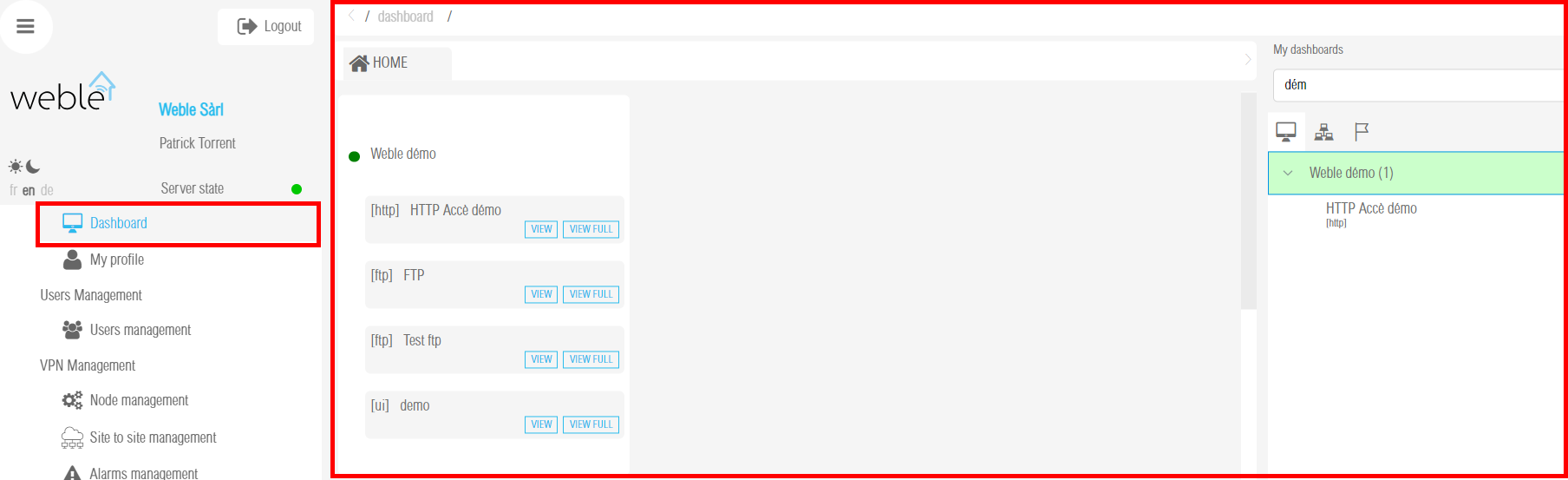
Each user has a personal dashboard displaying the connections they have been granted access to.
¶ Accessing your dashboard
-
Log in to the Weble Cloud.
-
Click on Dashboard in the left panel.
¶ Host connections
¶ Host connections, dashboard connections and group dashboards
- A host connection is defined on a gateway (host) by an administrator. Users with full access to the host can use it directly.
- A dashboard connection links a host connection to one user: it appears on that user's dashboard and in Weble Connect.
- A group dashboard connection links a host connection to a group: every member of the group gets it.
Host connections can be created from Node management (below) or from Weble Connect (New connection in the host menu).
Users download the configuration of a PPTP/L2TP/IKEv2 connection with the Download button of the connection on their own dashboard.
¶ Creating a host connection
-
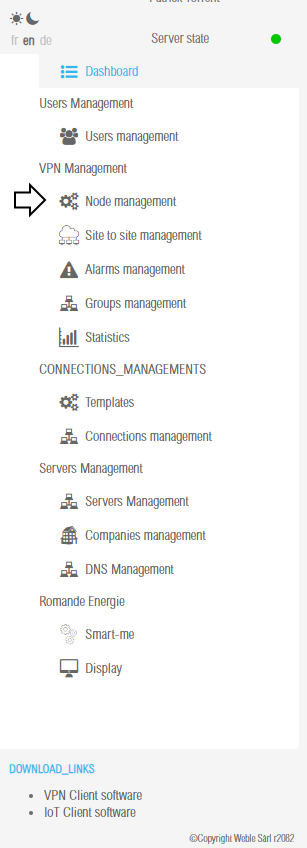
Navigate to the Node management page.
-
Click on Edit host connections in the host actions menu.

-
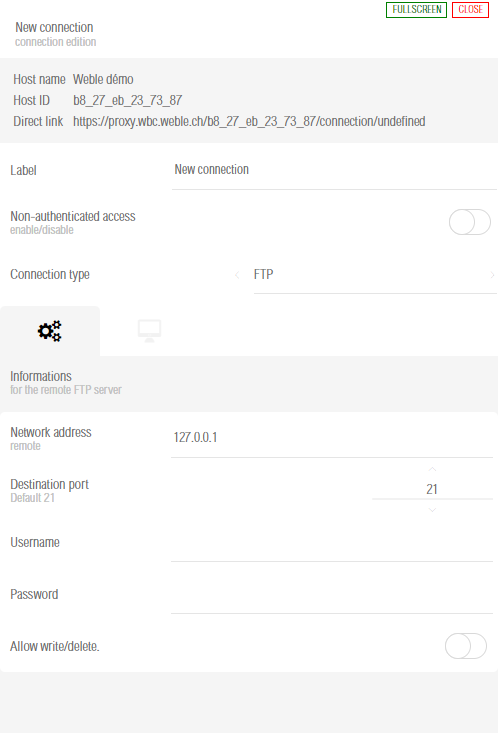
Click Connection insert and configure the connection parameters.

¶ Common settings
| Setting | Description | Default |
|---|---|---|
| Label | Name shown in dashboards, in Weble Connect and as the folder name in the FTP proxy. | – |
| Description | Free text. | – |
| Non-authenticated access | Anyone who knows the connection's direct URL can open it without logging in to the Weble Cloud and without any access-right check. | off |
| Connection type | RDP, VNC, SSH, HTTP, FTP, TUNNEL or PPTP/L2TP/IKEv2. It cannot be changed once the connection is saved. | RDP |
| Enable connection | A disabled connection cannot be opened. | on |
Non-authenticated access removes the Weble Cloud login for this connection. Enable it only for content that may be public, never for RDP, SSH or VNC access to production machines. See also the gateway-level option in Hosts.
For protocol-specific configuration details, refer to: RDP, VNC, SSH, HTTP, FTP, Tunnel, Native VPN.
¶ Assigning connections to users
By default, users do not have access to any connection unless they have full access to the host. To grant access, you need to link the connection to the user's dashboard.
¶ Linking a connection to a user
-
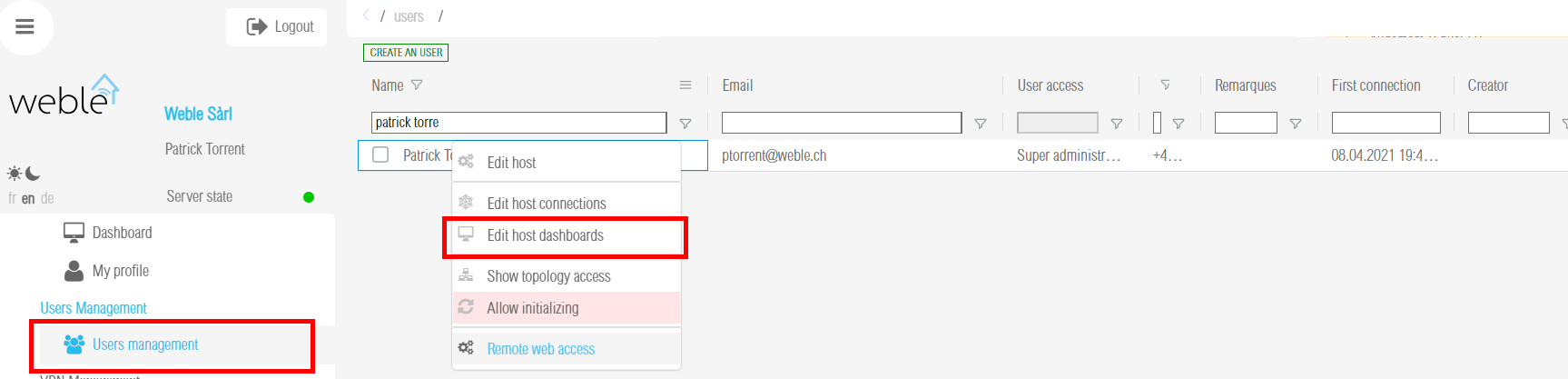
Go to User management.
-
Right-click on the user and select Edit dashboard.
-
A panel opens showing available connections for this user.
-
Search for the connection you want to assign.
-
Drag and drop the connection onto the user's dashboard table.
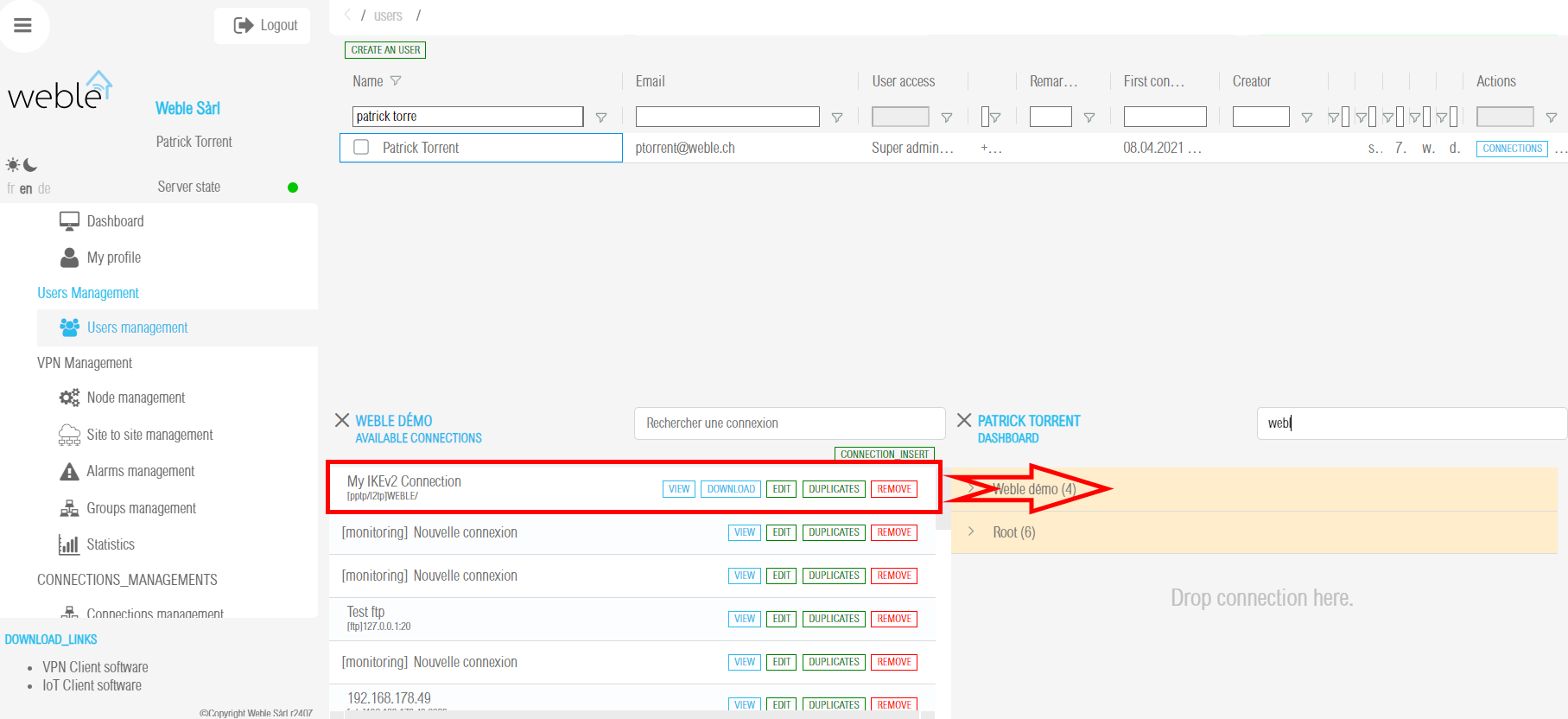
The user will now see this connection on their dashboard.
¶ Linking a connection to a group
A connection can be associated with a group. Once linked, all users in the group will have access to the connection through their dashboards.
In Group management, right-click the group and select Edit Group Dashboard, then add the connection as for a user.
If VPN on demand is enabled for the gateway with Dashboards – Unlock activation from dashboards, users can also activate the VPN of the gateway from their dashboard and from Weble Connect.
¶ Opening a connection with a native client
In Weble Connect (Windows application), the menu of an RDP or HTTP connection offers Native connect next to Connect. SSH and VNC connections offer it once the path of an SSH or VNC client is set in the Weble Connect configuration (see Weble Connect, Native connection).
- RDP, SSH, VNC: Weble Connect prepares a forwarded port through the Weble Cloud and starts the matching program on the PC: Remote Desktop Connection (
mstsc) for RDP, the configured SSH or VNC client for SSH and VNC. - HTTP: the connection opens in your default web browser instead of the Weble Connect window.
No option has to be enabled on the connection.